Indigenous Environmental Governance for Woodfibre LNG Project
| Location | Squamish, BC |
| Client | Sḵwx̱wú7mesh Úxwumixw (Squamish Nation) |
| Service | Indigenous Services, Strategic Advice, Environmental Assessment and Approval, Regulatory Submission, Environmental Management, Risk Assessment |
Key Stats
- First Indigenous-led EA for major industrial project in Canada
- 50km pipeline and LNG facility governed under Squamish Process
- Ongoing Indigenous regulatory oversight since 2014
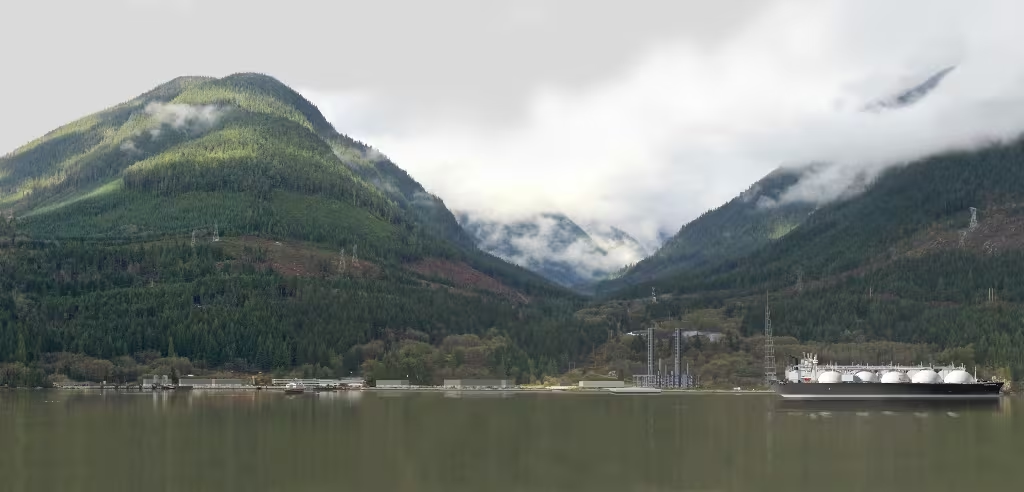
For decades, Squamish Nation (SN) experienced industrial development in its Territory through processes that did not recognize SN’s values, Rights, or responsibilities to land and water. When a proposed LNG pipeline and export facility was planned for Howe Sound, the Nation faced a familiar challenge of navigating how to evaluate a major industrial project without being confined to a consultation role in someone else’s decision-making system.
Rather than rely solely on provincial and federal environmental assessment processes, SN chose to lead its own. In 2014, the Nation partnered with PGL to design an independent, Indigenous-led environmental assessment grounded in SN’s values and community knowledge. Together, SN and PGL created what became known as the “Squamish Process”, a parallel assessment that placed SN at the centre of the evaluation and decision-making.
Community Members, Elders, and technical experts shaped the assessment through open houses, focus groups, and direct engagement. Instead of focusing only on regulatory thresholds, the process examined how the LNG pipeline project could affect Squamish lands, waters, Rights, and culture and what conditions would be required for those impacts to be acceptable.
In 2016, SN issued its own Environmental Certificates for the pipeline and export facility, with legally binding conditions that exceeded what provincial or federal processes would require. These conditions led to major project redesigns, including eliminating cooling water discharge to Howe Sound, avoiding construction in the Skwelwil’em Wildlife Management Area, and relocating infrastructure away from a SN reserve.
Today, SN continues to act as a regulator for the project, overseeing implementation, compliance, and monitoring with PGL’s support. The Squamish Process marked a shift from consultation to governance and demonstrated how Indigenous-led environmental assessment can result in stronger environmental protection, clearer accountability, and decisions rooted in the values of the people most affected.
For decades, Squamish Nation (SN) experienced industrial development in its Territory through processes that did not recognize SN’s values, Rights, or responsibilities to land and water. When a proposed LNG pipeline and export facility was planned for Howe Sound, the Nation faced a familiar challenge of navigating how to evaluate a major industrial project without being confined to a consultation role in someone else’s decision-making system.
Rather than rely solely on provincial and federal environmental assessment processes, SN chose to lead its own. In 2014, the Nation partnered with PGL to design an independent, Indigenous-led environmental assessment grounded in SN’s values and community knowledge. Together, SN and PGL created what became known as the “Squamish Process”, a parallel assessment that placed SN at the centre of the evaluation and decision-making.
Community Members, Elders, and technical experts shaped the assessment through open houses, focus groups, and direct engagement. Instead of focusing only on regulatory thresholds, the process examined how the LNG pipeline project could affect Squamish lands, waters, Rights, and culture and what conditions would be required for those impacts to be acceptable.
In 2016, SN issued its own Environmental Certificates for the pipeline and export facility, with legally binding conditions that exceeded what provincial or federal processes would require. These conditions led to major project redesigns, including eliminating cooling water discharge to Howe Sound, avoiding construction in the Skwelwil’em Wildlife Management Area, and relocating infrastructure away from a SN reserve.
Today, SN continues to act as a regulator for the project, overseeing implementation, compliance, and monitoring with PGL’s support. The Squamish Process marked a shift from consultation to governance and demonstrated how Indigenous-led environmental assessment can result in stronger environmental protection, clearer accountability, and decisions rooted in the values of the people most affected.